This event was organised by the UK Coalition Against NTDs, The Leprosy Mission, Liverpool School of Tropical Medicine, Keele University, Brighton and Sussex Medical School, London School of Hygiene and Tropical Medicine, University of Birmingham and Kent and Medway Medical School.
On Thursday 16th January 2025, the 5S Foundation and GHRU Phase 2 contributed towards an event to showcase UK investment in NTD Research. This high-level gathering demonstrated how UK research institutions, funded by NIHR, drive transformative change for more than a billion people affected by NTDs worldwide.
The event met with the aims of calling for interdepartmental (FCDO, DHSC, DEFRA) strengthened policy positions and frameworks that ensure inclusive integration of NTDs in health systems strengthening approaches. It also aimed to continue growing support for cross-border health initiatives that address NTDs in conflict-affected regions, building on the UK’s humanitarian expertise. Finally, it called for continued and new funding for crucial research that builds on evidence for the most cost-effective ways to deliver interventions that support affected communities; including implementation research on gender-responsive NTD programs that address access barriers for women and girls.
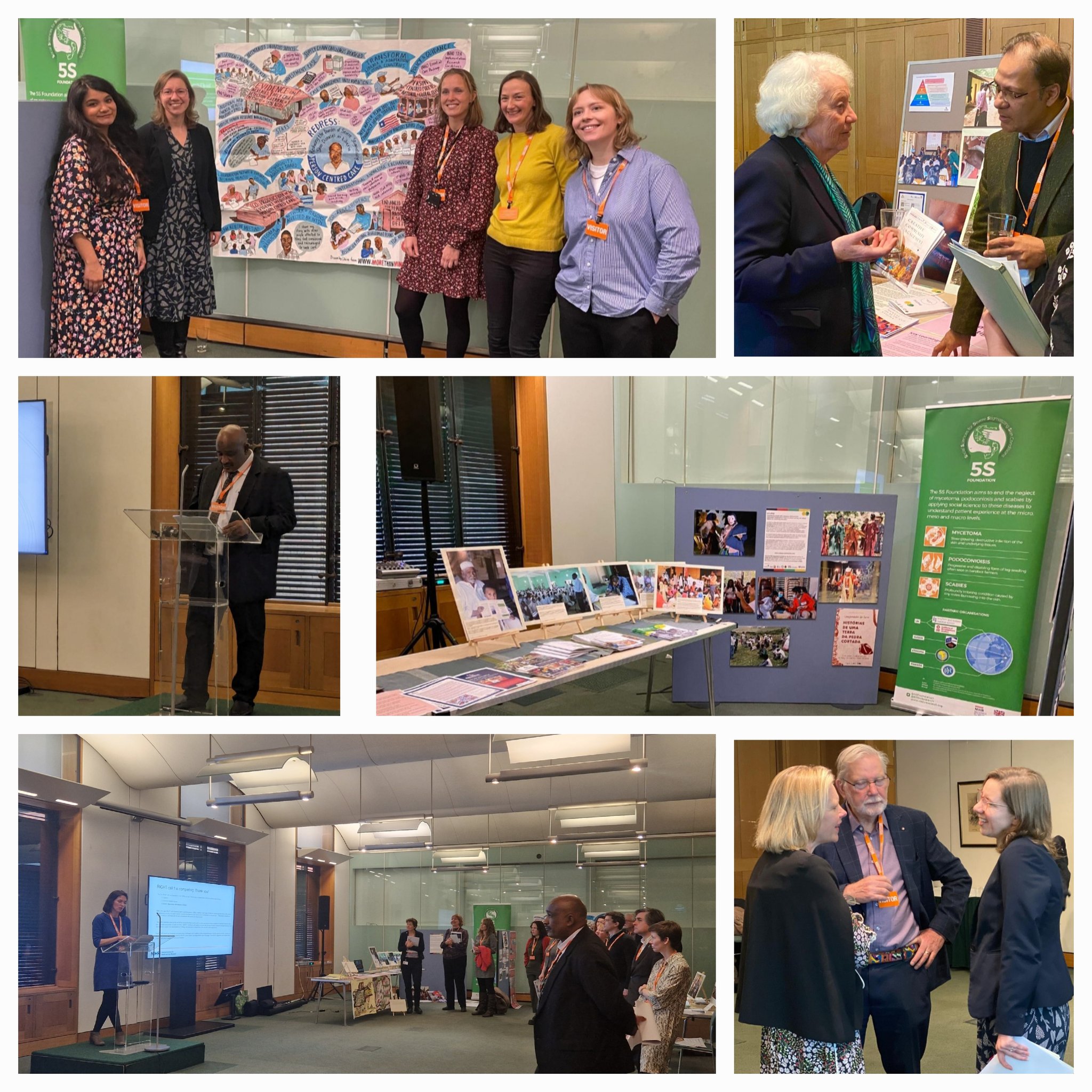
This successful event was comprised of various invited speakers who provided a variety of stakeholder perspectives into NTD Research. Attendees at this event included member Universities from across the PROSPER Network, DHSC, NIHR, RTI International, RSTMH, PATH, The Malaria Consortium, ISNTD, NNN; as well as APPG Members. Before the speeches, attendees had the opportunity to network, and discuss the work on display. Jenni discussed with Claire McIver of DHSC the importance on continuing research funding through conflict reflecting on the experience with NIHR, BSMS and the University of Khartoum. Dr Gem Aellah connected with Baroness Hayman, who had visited Ethiopia earlier last year with the parliamentary delegation, and was happy to be able to revisit the work displayed during this trip.
The event started with a welcome from Dr Lauren Sullivan MP, the Co-Chair of the All-Party Parliamentary Group on Malaria and Neglected Tropical Diseases. Dr Sullivan thanked the researchers for their incredible work to drive real change and impact for those affected by neglected diseases, noting how ending these preventable and treatable severe stigmatising skin diseases is achievable through a concerted global effort, partnership, and integration.
Next, Clare MacIver from DHSC presented the NIHR Global Health Research Portfolio and, in particular, the RIGHT scheme to support UK and low- and middle-income-country-based research to address the unmet health needs of low- and middle-income countries. She acknowledged the clear breadth of new research knowledge and evidence for interventions to improve health outcomes of those affected by severe skin stigmatising skin diseases, and stated that NIHR will continue to work with these impressive projects to identify emerging outcomes and support dissemination of findings and impact.
We then heard from Dr Ganawa ElTaib, Co-Investigator of 5S Foundation, University of Khartoum, Sudan. Dr ElTaib highlighted the impact of stigma in scabies-affected communities in Sudan and the importance of research in ensuring access to solutions. He went onto share a powerful testimony about the impact of conflict on himself, the research, and the community. He finished by urging the UK to continue pressing for peace in the region and assist with urgent lifesaving support.
Finally, we heard a video testimony from Jayashree Kunje, a person affected by leprosy and who is a Co-Investigator on the NIHR Grant at University of Birmingham. She discussed her experience with leprosy and her subsequent commitment to eradicating the social injustice of stigma and discrimination, as well as continuing to shine a spotlight on the struggle of many in affected communities to access public services and social acceptance.
Following the speeches, Dr Lauren Sullivan closed the session. She commented that the breadth of new research knowledge and evidence for interventions to improve health outcomes of those affected by severe skin stigmatising skin diseases was clear to see. She added that it was encouraging to hear NIHR will continue to work with these impressive projects to identify emerging outcomes and support dissemination of findings and impact.
Attendees were invited to visit four different stations, themed around the various approaches and areas of research into NTDs, collaboratively created by Universities across the PROSPER Network. BSMS contributed to stations on stigma, conflict and creative community engagement in collaboration with other universities from the PROSPER Network. Staff from both the 5S Foundation and the GHRU Phase 2 who contributed included Professor Zaman Shahaduz, Jenni Wilburn, Jo Middleton, Dr Gemma Aellah and Rachel Jackson. Images from all the collected work was presented, with great thanks to all 5S and Unit PhDs, PDRFs, PEOs and Co-investigators.
You can view the key messages from each station below