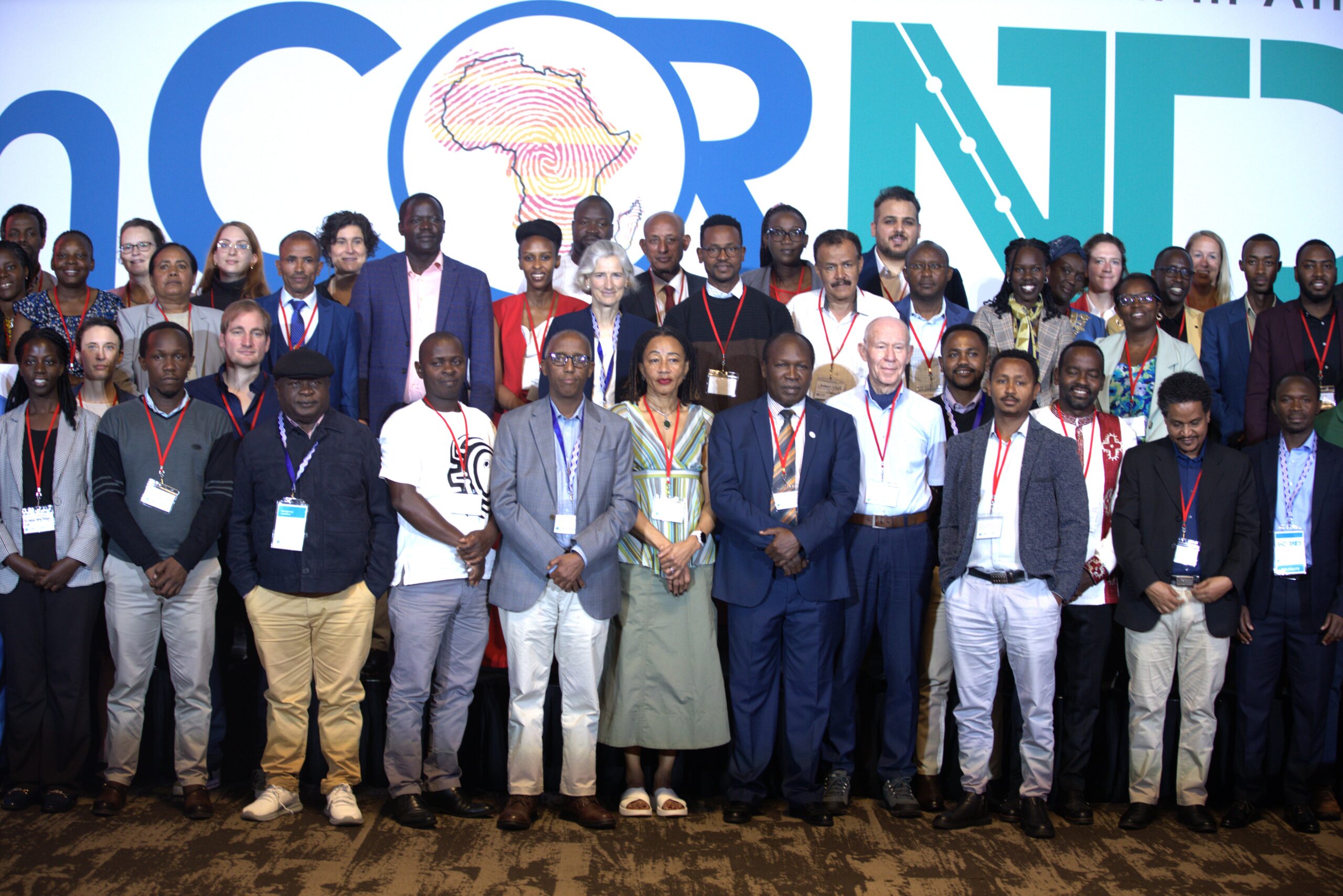
On 23 January 2025, at the Kigali Convention Centre in Rwanda, the Second International Podoconiosis Conference took place with over 100 attendees from across the world. Delegates from Ethiopia, Cameroon, India, Uganda and Rwanda, consisting of policymakers, researchers, community leaders, development professionals, implementers and people with lived experience.
The conference aimed to highlight the devastating impact of podoconiosis and called for coordinated efforts to eliminate the disease. The conference not only fostered international collaboration but also emphasised the critical role of media in raising awareness among affected communities. The theme of the conference was “From Neglect to Elimination with Country Ownership”, which was chosen to align with the WHO NTDs Roadmap. Organisers and sponsors including Izumi Foundation, Footwork, Heart and Sole Africa, Izumi, Rwanda Biomedical Centre, Brighton and Sussex Medical School and WHO Rwanda sought to strengthen global advocacy for the formal recognition of podoconiosis by the WHO as an NTD. Such recognition would open avenues for greater resources and intervention strategies.

Many members from the research team across the 5S Foundation and the GHRU Phase 2 were in attendance and presented at the impactful conference. The event Masters of Ceremony were 5S Foundation’s Gail Davey and GHRU Phase 2’s Dr Asrat Mengiste, who also serve as Footwork Trustees, who explained the purpose of the meeting to bring together people working to improve the lives of people with podo, an easily preventable disease. They provided history and context on podoconiosis, and thanked the various partners and sponsors.
Throughout the day there were presentations from researchers, policymakers and community advocates. Presentations within research and implementation sessions there were delivered by recent 5S Foundation PhD doctorates.

Dr Corinna Thellmann presented on the topic of “Women’s access to and partaking in a disease management intervention for podoconiosis sin Rwanda: Challenges and recommendations”. She discussed how women struggle to find and afford comfortable and durable shoes, and were constantly exposed to irritant soil inside compounds and houses. She addressed the additional challenges that gender plays in creating barriers to treatment, expressing that women could often not afford the materials for treatment – they were given soap but this would often be used for laundry or shared with family members so they had less for themselves.
Dr Jean Paul Bikorimana presented “Achievements, challenges, and recommendations: Lessons learnt from the podoconiosis services in public health centres in Rwanda.” He stressed that mainstreaming of podo services is critical for podo elimination, and that currently, thousands lack access to proper treatment. He stressed that services have to be inclusive and that sustainable investment in podoconiosis is needed to increase budget for activities and to increase podoconiosis visibility for more funding opportunities.

They were then followed by 5S Foundation PDRF Dr Kibur Engdawork, who presented his findings on “the role of NGOs in mainstreaming services for podoconiosis into healthcare facilities: The case of two NGOs in Ethiopia”. This session of research presentation was chaired by Dr Asrat Mengiste, Technical Advisor on the GHRU Phase 2. Kibur highlighted that NGOsplay important role in tackling NTDs, but noted there has been a shift from direct to mainstreaming interventions. However, there is a lack of evidence from NGOs themselves and the effectiveness of such programmes. He raised challenges include shortage of funding, limited capacity of local facilities to sustain projects and over reliance on individual level quantifiable short-term outcomes rather than system and normative changes.
In the second research session, GHRU Phase 2 PDRF Dr Fisal Tantoush presented his current work on “Characterization of Immune Responses in Podoconiosis: A Rwandan Cohort Study”. In his presentation, he raised that the mechanisms of podoconiosis is largely unknown, but previous studies show association with HLAII, and evidence of chronic immune activation.

The day concluded with a presentation from Professor Getnet Tadele, National Champion of NTDs in Ethiopia and Co-Investigator of 5S Foundation. He made the case for domestic resources to be allocated for NTD interventions and the importance of acting on commitments. He suggested that governments be strategic in mobilizing direct and indirect domestic resources in order to be less dependent on external donors. He also stressed the importance of considering the non-economic benefits of healthcare within society and its wider affects across sub-populations.
The conference provided a strong case for galvanising action to reduce stigma, improve access to treatment, and ultimately eliminate podoconiosis as a public health threat. The strong presence of 5S Foundation allowed social sciences to be a key part of this discussion and brought attention to its importance in a conference dominated by a variety of stakeholders. This presence was reinforced by the GHRU which continued to advocate for interdisciplinary research to provide an evidence base for interventions.
At the conclusion of the conference, a panel of judges presented two awards, Best Research Award and Best Implementation Award to recognize outstanding contributions from the day’s presentations. We are proud to announce that Dr. Jean Paul Bikorimana received the Best Implementation Presentation Award.
This gathering was well attended by various news outlets from Rwanda, who attended throughout the day. “Media coverage is crucial in amplifying the key messages from this conference,” a spokesperson for the organising committee stated. “We are committed to sharing the key findings to support accurate and impactful reporting”.
Media coverage included:
TOP AFRICA NEWS: https://www.topafricanews.com/2025/01/24/rwanda-pledges-to-eradicate-podoconiosis-by-2030-a-global-health-milestone/
LE CANAPE: https://lecanape.rw/rwanda-sante-eradication-de-la-podoconiose-en-2030/
IGIHE.COM : https://igihe.com/ubuzima/indwara/article/hari-abarwayi-b-imidido-hafi-5-000-bataravurwa-mu-rwanda
IMVAHO NSHYA: https://imvahonshya.co.rw/abantu-1311-bakize-indwara-yimidido-mu-rwanda/
BTN TV: https://www.youtube.com/watch?v=lMyhZrQM9gU (7th minute)
TV1: https://www.youtube.com/watch?v=4RjOSkTbRPU (12th minute)

Podoconiosis, a neglected tropical disease caused by prolonged exposure to irritant red clay soils derived from volcanic deposits, leads to severe lymphoedema (swelling of the lower limbs). The disease affects highland areas in tropical Africa, Central America, and north-west India. In Rwanda, an estimated 7,000 people have been affected, facing both economic hardship and social stigma.