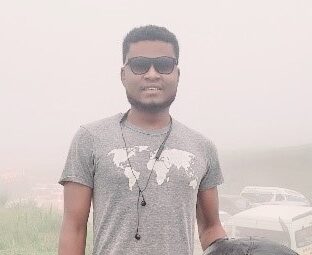
I might have been a little lucky. My academic journey began with the NIHR Global Health Research Unit on NTDs in the UK, marking the first time I boarded a plane. I didn’t tell my family until my visa was confirmed and my ticket booked—simply because I couldn’t believe it was happening.
My first flight took me from Khartoum Airport to London Heathrow, with a layover in Cairo. I had always heard about London and read about it in books, and now it was a reality before me. When the plane took off, I felt a mixture of excitement and apprehension, as if I were stepping into an entirely new world. When I landed at Heathrow, everything felt different, the way people moved, the precision of schedules, and even the air itself seemed to carry a different scent.
Upon arrival, a driver was waiting for me. His face bore a mix of sternness and friendliness. He took us to the hotel, where I arrived late at night with no time to rest. With the break of dawn, I had to prepare for my first meeting. I woke up early, approached the window, and speculated the scene. The soft, moist on the streets, the trains gliding smoothly, and pedestrians moving with precise steps. After a quick shower, I went down for breakfast before heading to the meeting room, where everything was meticulously organized, leaving no space for chaos.
Everything was new to me—the environment, the people, even the train stations, which were nothing like those in Nyala, Western Sudan. It was clear that Englishman “Khawaja” had an inherently structured way of thinking. They spoke quickly, especially the natives.
Then came Brighton—a different city altogether. A city of sea and freedom, where the spirit of liberalism was at its peak. I loved its beachside atmosphere, but it was only a short stop in my journey.
I attended most of the sessions that were relevant to me and met people from various fields and nationalities. In the second-to-last session, I presented my PhD proposal and engaged in discussions with new colleagues, each carrying a different story and a unique experience.
After the meetings, I decided to visit my older brother in Swansea. It was a long journey, filled with anticipation and excitement—it had been more than ten years since we last met. I had a great time with his family, exploring cities like Cardiff, Bristol, and London, visiting places I had only known in geography books and novels. Upon leaving the UK, a lingering question remained in my mind: Why do people here move at such a fast pace, scheduling everything, even social visits? Here, there was no place for the saying, “A fortunate coincidence is better than a thousand appointments.
But fate hadn’t yet spoken its final word. The NIHR Global Health Research Unit on NTDs led me on another journey—this time into the heart of East Africa, traveling between Ethiopia, Kenya, Uganda, and Rwanda, as if my footsteps were tracing a quadrilateral shape on the map of the region. Each country had its own colour and unique composition, resembling a mosaic of cultural and natural diversity.
Ethiopia was my first stop—a city brimming with life and diversity, where religion, culture, and climate coexisted in a harmonious painting. Even the poor, despite hardships, carried a mysterious joy reflected in their smiles—a land filled with tolerance and love.
In Uganda and Kenya, I chose to see them through the eyes of an ordinary traveler rather than an academic researcher. I decided to take a bus from Kampala to Mombasa, a journey that carried me through breathtaking landscapes—from lush green plains to shimmering lakes, all the way to the shores of the Indian Ocean. Nature pulsed with life, and the sight of a zebra roaming freely in the savannah was a striking reminder of the beauty of the wild.
As for Rwanda, I arrived knowing more about its tragic history of civil war than its geography, and I was somewhat familiar with its success story. Research had led me there as a visiting scholar. What struck me most, beyond its renowned cleanliness and order, was the Rwandan people themselves—their warm hospitality, the cozy homes that felt like a piece of the English countryside, the stunning hills, and the pleasant climate—all of which brought a deep sense of comfort.

My friend Gashegu, whom I had met through research projects, welcomed me warmly and invited me to dinner with his friend, Professor Nadine, who is the youngest professor in Rwanda according to the latest rankings. Our conversation felt like a long-overdue reunion among old friends, perhaps because research had given us common ground, or maybe because science, at its core, knows no borders.
The next day, I visited the University of Rwanda and took a ride on a boda boda—the famous motorcycle taxi of East Africa. I don’t speak the local language, and the driver doesn’t speak English, so I relied on my phone for translation. Somehow, we understood each other. When I met Professor Lawrence, he greeted me warmly and took me on a tour of the college, confirming what I had already sensed: Rwandans truly embrace others with open hearts.
Yet behind all this beauty and nature lay another story—one of silence and suffering. In the narrow alleys and remote rural areas, I met those who were dying quietly from lymphatic filariasis, and podoconiosis, and others who had lost limbs and livelihoods to leprosy and mycetoma. I was there to hear their stories, to feel their pain, and to realize that research is not just about numbers and theories, it is a voice for those who have none.
Here, in the heart of Africa, I understood that a true researcher is not just someone who reads books, but someone who reads the faces of people, their struggles, and their deferred dreams. Perhaps that’s why I found myself saying: My life’s story will be about the sick, their suffering, and the ways to help them. I will draw a map—not just of geographical locations, but one that tells their stories, marks where they live, and illuminates the path toward solutions that ease their pain. My map will be their compass to care.
Thank you to Mesoud Bushara, we are very grateful to you for sharing such a moving story. Mesoud is a PhD Candidate on the GHRU Phase 2 on NTDs, and is conducting his research in Geospatial Mapping.