In Rwanda, the 5S Foundation team based at the University of Rwanda focused on enhancing the wellbeing of people living with podoconiosis, through communicating an evidence-based understanding of the causes of stigma experienced by patients and their communities to those working nationally to prevent and eliminate the condition.
The 5S Rwanda team was successful in convening a partnership between the Rwanda Ministry of Health via the Rwanda Biomedical Centre (RBC), international organisations and local non-government organisations to enhance disease surveillance, train healthcare workers in early detection, prevention, stigma eradication and treatment. They also engaged with and provided training to media and social media influencers to increase awareness and education more widely across communities.
Background
Podoconiosis patients in Rwanda face severe physical, emotional, and socio-economic burdens. The disease causes painful swelling and disfigurement of the legs, limiting mobility and leading to social stigma and isolation. Patients often struggle with depression and anxiety due to their condition and their ability to work is significantly reduced, resulting in a loss of income.
“I lost my job as a carpenter which was my sole source of livelihood and support for my family of two daughters and their mother, after this disease attacked me, they all deserted me in this bush which I call my home now.”
– Testimony of 68-year-old Jean Damascene who suffers from podoconiosis.
Healthcare costs for managing the disease add further financial strain, and the limited access to adequate and accessible healthcare provision exacerbates these challenges, trapping patients and their families in a cycle of poverty and suffering.
Since its inception the 5S Rwanda team has been engaging and collaborating with other NTD actors in the country to plan and lay strategies that align with the World Health Organization’s roadmap of eliminating NTDs by 2030. This multisectoral collaboration has impacted on the Ministry of Health and country’s agenda to eliminate NTDs.
Below we share some examples of this.
Design and communication of messages about podoconiosis in Rwanda
To create coherent messages around podoconiosis to help address some of the more stigmatising aspects of the condition among patients and communities, the 5S Rwandan team led a collaborative series of workshops with key stakeholders to produce messages and communication materials for healthcare workers, communities and patients.
The 5S Foundation collaborated with the RBC, Heart and Sole Africa (HASA), the Rwanda NGOs Forum on HIV/AIDS and Health Promotion, Rwanda health communication experts, the World Health Organisation, the Rwanda Dermatology Society, the National Council of People with Disabilities, IntraHealth, The End Fund and Urunana Development Communication.
The audio- visual materials were validated and officially adopted by Rwanda’s Ministry of Health/ RBC and were printed and distributed to affected communities.
The team also produced a short film that was uploaded on the official website of RBC and rolled out in all podoconiosis treatment centres across the country.
Capacity strengthening of community health workers and health providers
The 5S Rwanda team identified the significant opportunity that came with widening the knowledge of community health workers and health providers working on podoconiosis in Rwanda. In partnership with government and implementing organisations, the 5S team jointly provided five training sessions to thirty-four stakeholders on podoconiosis causes, signs and symptoms, prevention, treatment and stigma management for heads of health centres (8) community health workers (16) and other health providers (8), which included hearing directly from people living with the condition to better understand their challenges and needs.
After participating in such training, a community health officer in Nyamasheke District shared:
“It was a great opportunity to hear about the lived experience of patients and deepen my understanding of the stigma faced by them and what could be done to fight against that stigma. I will now take that knowledge to my colleagues”
Inclusion of podo patients into existing government programmes that could support them
5S Rwanda’s partnership with the local government in the areas where the research and public engagement were conducted such as Musanze, Nyamasheke and Burera districts, resulted in the active engagement of local authorities to campaign against stigma and neglect experienced by podoconiosis patients. In addition, the 5S team advocated for the inclusion of podoconiosis patients into government programs that help people living with disabilities such as the Vision Umurenge Program (VUP). The Vice mayor in charge of social affairs at Nyamasheke district recently announced that this will start in Nyamashake District, the location of our PhD field work, in July 2025 with the new financial year.
Empowering health reporters and social media influencers
The project organised a training workshop for health reporters and social media reporters to enrich their knowledge of understanding skin diseases including podoconiosis and scabies, as well as raise awareness and increase advocacy to eliminate stigma experienced by patients suffering from the diseases.
Health reporters and social media influencers played a crucial role in combating stigma by promoting accurate, empathetic, and inclusive messaging on podoconiosis and scabies using their deep knowledge acquired from the 5S Foundation training. This was delivered to sixteen media and reporters in total including Kemique and Tito (social media influencers), Insango star TV & radio, RBA, TVI & Radio1, UMueske, TV10, BTN TV, Flash TV, Igihe.com, Radio izuba TV & Radio, Radio isangono, imvaho nshya , imirasire.
The training was delivered in Musanze district and included heads of health centres (8), intervention managers (2), podoconiosis patients (20), caregivers (20), community health workers and officers (24) and reporters and social media (16).
HASA’s director shared that following these pro-active campaigns, there was an increase in the number of podoconiosis patients coming to seek treatment that were not previously registered.
Counselling and guidance for patients and their caregivers
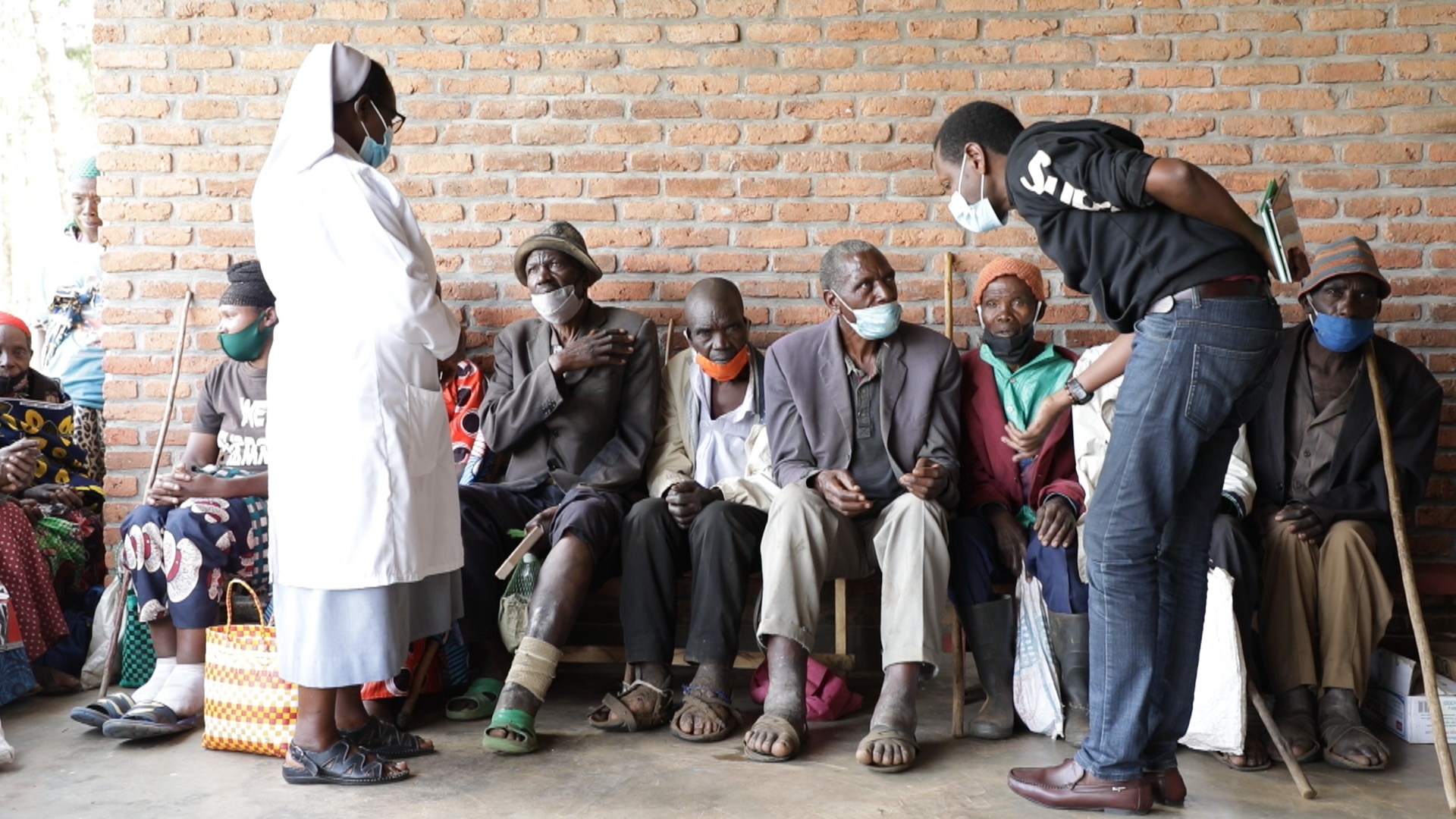
The 5S Rwanda team held a series of workshops with podoconiosis patients in the most endemic areas of Nyamasheke and Musanze districts. The sessions used 5S messaging to bring hope, confidence and encourage participants to engage in income generating activities, as this has been shown to be a determinant of wellbeing for patients and their families.
Furthermore, the gatherings encouraged patients to seek treatment from nearby health centres in their respective areas, as well as guiding them through self-care practices such as washing and soaking the feet in water and applying bandages and cream.
In relation to the above, the 5S team also engaged with the caregivers of podo patients and their families and communities and used these meetings as opportunities to dispel fears around infection, by explaining the causes of the disease, that it is not infectious, and hence encouraging them to continue to support their relatives and friends without fear of contracting the condition.
One caregiver noted ”As we take our brothers and sisters to hospital suffering from other diseases, we consider podo conditions like any other person with other diseases, we don’t neglect or subject them to stigma. The only problem they have is their lower leges, otherwise, they are normal as ourselves, indeed they help us in farm work, to the extent without, prior knowledge, of their condition, you cannot easily distinguish them from health people.
Some engage in extra- farm activities, basket weaving, through which they earn a living. Podo patients ought to be treated with same care as any other people with any other disease. And whoever, discriminates or stigmatize podo patients should now change his or her attitude and consider them as any other ordinary citizen”
Partnering up with the religious council
The 5S Rwanda team collaborated with the umbrella of religious leaders (Rwanda Religious leaders forum) in the most endemic areas of southwestern Rwanda.
The 5S team understood that places of worship can help eliminate stigma in communities by promoting education and awareness, advocating compassion and acceptance in sermons, and providing support groups and counselling services to the podoconiosis patients.
Religious leaders can also model inclusive behaviour and create safe spaces for dialogue between podoconiosis patients and local leaders. By engaging in outreach programs, serving all individuals without judgement, and advocating for systemic change, the church fosters understanding and breaks down barriers. Additionally, it can highlight stories of recovery and offer spiritual support, encouraging a more accepting and stigma-free community.
This article was written in collaboration by Tom Barker, Esther Garibay, Peter J. Mugume, David Muhwezi, Jenni Wilburn