A report on the final dissemination activities held in Sudan
The conclusion of the 5S Foundation research project provided an opportunity to share findings, reflect on achievements and challenges, and consider their implications for future practice and research. Dissemination activities in Sudan were especially significant, bringing together research findings, researcher development, public engagement, institutional collaboration, and community perspectives. As a collaborative initiative spanning multiple institutions and disciplines, the project placed strong emphasis on research capacity building and engagement with communities affected by severe and stigmatizing skin conditions. These activities took place amid the ongoing conflict in Sudan, which has severely disrupted communities, health systems, universities, and research. In this context, maintaining connections between researchers, institutions, and communities was a notable achievement in itself.
Closing workshops
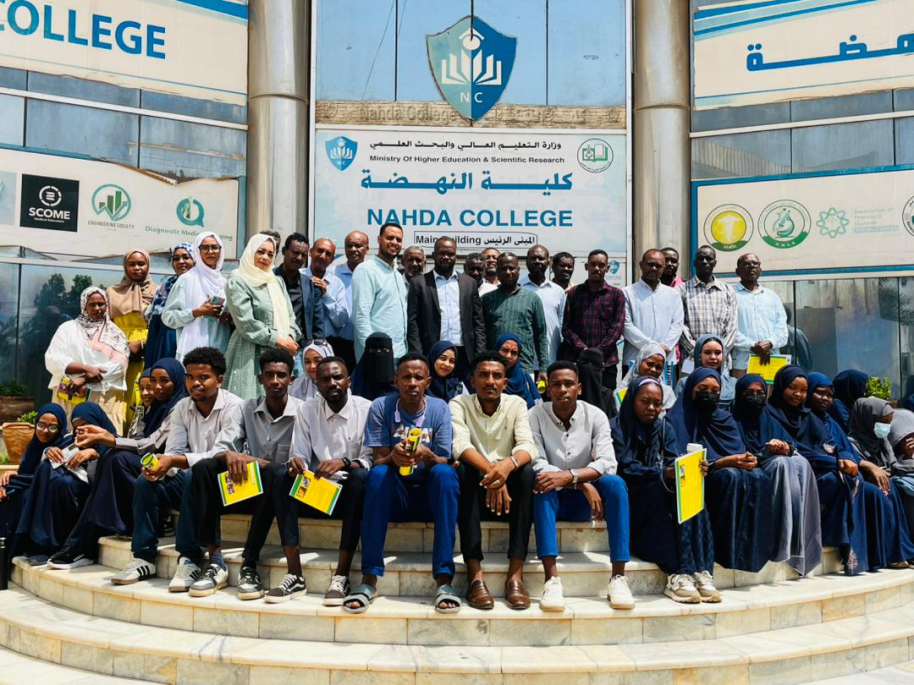
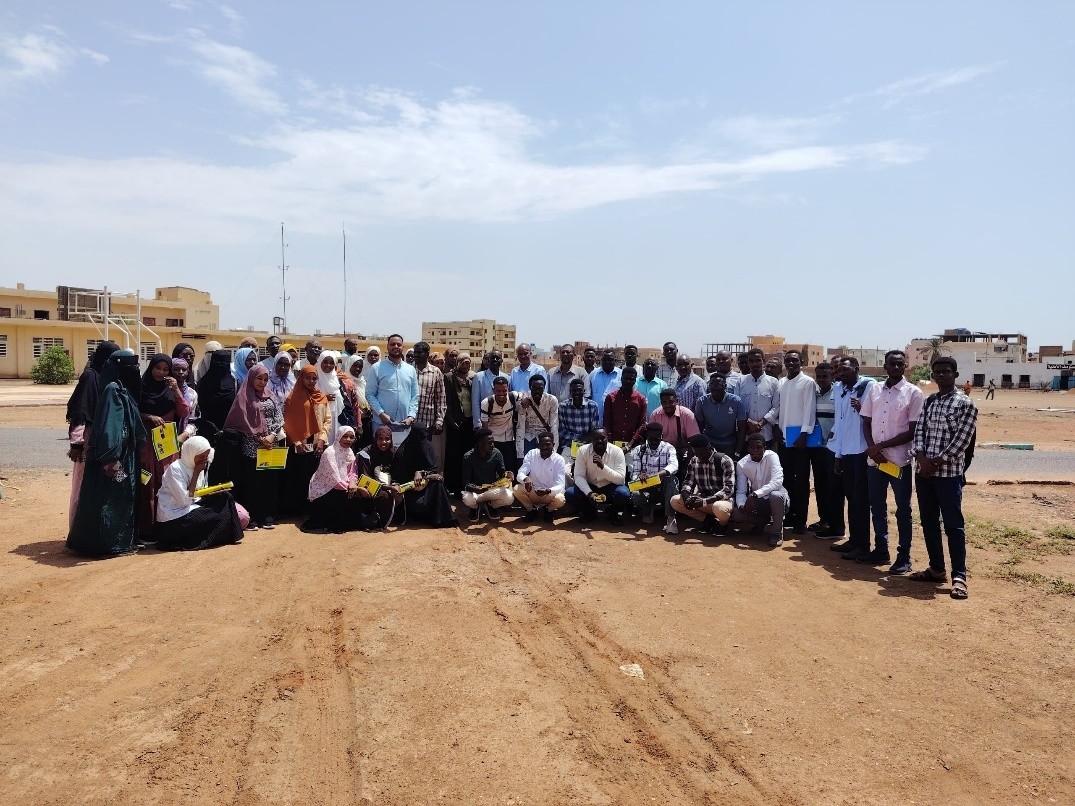
A key dissemination session was held at Omdurman Ahlia University Faculty of Medicine on Wednesday, 25 August 2026. The session was organized by the 5S Sudan team and brought together a broad audience comprising university staff, faculty members, medical and social science students, representatives of relevant personnel and members of the wider community. The composition of the audience was particularly valuable because it created an interdisciplinary environment in which biomedical and social science perspectives could be discussed alongside community experiences.
5S Foundation Project Reflections
The Project Co-PI, Dr Ganawa, presented an overview of how the project began and how it developed towards completion. His presentation provided participants with a narrative of the project’s development and highlighted the achievements generated throughout the project journey. Importantly, the project was presented not simply as a collection of individual studies, but as a collaborative platform through which researchers developed connections, acquired research experience and contributed to the understanding of severe stigmatizing skin conditions.
Presentation on Scabies Research
Dr. Shehabeldin presented research findings from the work of Dr Hala El Malik on scabies. The presentation addressed the recognition of scabies, including its signs and symptoms and approaches to treatment. It also presented information concerning scabies cases in Red Sea State. This presentation was particularly relevant because it connected research findings with practical questions concerning recognition, treatment and disease burden. The session also demonstrated how research generated through the 5S Foundation could remain relevant to communities and health stakeholders despite the extremely challenging circumstances created by the ongoing conflict in Sudan.
Public Engagement Activities
Project Coordinator Dr Ahmed Elfaig presented the 5S Foundation’s public engagement activities across Khartoum, Bantio IDP Camp, Red Sea State, and the Al-Andalus area. These activities were a key part of the 5S approach, creating opportunities for dialogue between researchers and communities. Beyond sharing information, they helped researchers understand community experiences and perspectives, strengthening the connection between research and the people it seeks to benefit.
Community Engagement and Mycetoma Research
The Al-Andalus area was particularly relevant to the dissemination because it was the setting in which Dr. Badraldeen Ali Bashir Alnoor conducted his ethnographic research on mycetoma. The public engagement activities undertaken in the area created an important bridge between community engagement and research dissemination. The research demonstrated the value of spending time within communities and engaging with local perspectives in order to understand a disease whose significance may not be fully captured through biomedical indicators alone.
”The Al-Andalus experience illustrated the importance of community engagement in generating knowledge about NTDs. Communities are not merely recipients of health information; their experiences, perceptions, practices and interpretations can provide essential evidence for understanding disease and designing appropriate responses.
Why Social Sciences Matter in NTD Management?
The presentation explored how social science approaches can reveal dimensions of disease that may remain hidden when NTDs are approached exclusively from biomedical perspectives.
Social science approaches can contribute to understanding:
- How communities understand disease;
- How symptoms are interpreted;
- How people decide when and where to seek treatment;
- How cultural practices influence health behavior;
- How stigma affects individuals and families;
- How environmental conditions shape exposure;
- How social and economic circumstances influence access to care; and
- Why some diseases remain neglected despite their consequences for affected communities.
Social Science as a Lens for Understanding Mycetoma
A central argument presented during the dissemination was that social science played a pivotal role in revealing dimensions of mycetoma that contributes to its neglect. Through ethnographic exploration and fieldwork, the research examined the relationships between disease, community, environment and culture. This approach provided an opportunity to understand mycetoma as more than a clinical condition. It demonstrated that disease experiences are embedded within:

This interconnected perspective is particularly important for neglected diseases because biomedical knowledge alone cannot fully explain why a disease remains poorly recognized, under-prioritized or inadequately addressed.
Unmasking the Neglect of Mycetoma
One of the important contributions of the research was its ability to unmask aspects of the neglect surrounding mycetoma.
The ethnographic approach made it possible to examine the disease from the perspective of the communities experiencing it and to identify relationships between environmental conditions, cultural understandings and responses to illness.
The research consequently contributed to a broader understanding of why mycetoma continues to represent an important yet neglected health problem.
One of the important contributions of the research was its ability to unmask aspects of the neglect surrounding mycetoma.
The ethnographic approach made it possible to examine the disease from the perspective of the communities experiencing it and to identify relationships between environmental conditions, cultural understandings and responses to illness.
The research consequently contributed to a broader understanding of why mycetoma continues to represent an important yet neglected health problem.
Conclusion
The 5S Foundation’s closing and dissemination activities in Sudan highlighted the achievements of a collaborative programme involving partners across Sudan, Rwanda, Ethiopia and the UK. Beyond producing research outputs, the project strengthened research capacity, fostered partnerships, promoted Global South collaboration, and supported interdisciplinary approaches to neglected and stigmatizing skin conditions.
The dissemination of Exploring the Interrelationship between Culture, Environment and Mycetoma in Sudan demonstrated the value of ethnographic and social science approaches in understanding NTDs within their cultural and environmental contexts. Discussions on scabies, mycetoma and the impact of conflict and displacement reinforced the importance of community engagement and locally grounded research.
Importantly, the workshops showed that dissemination is not an endpoint. Questions raised by students and participants, particularly regarding NTDs among displaced populations, highlighted emerging priorities for future research and action.
The 5S Foundation leaves a lasting legacy of strengthened relationships, enhanced research capacity, new knowledge and a platform for continued collaboration. The closing workshops therefore marked both the end of the formal project and the beginning of new conversations and opportunities to address neglected diseases in Sudan.