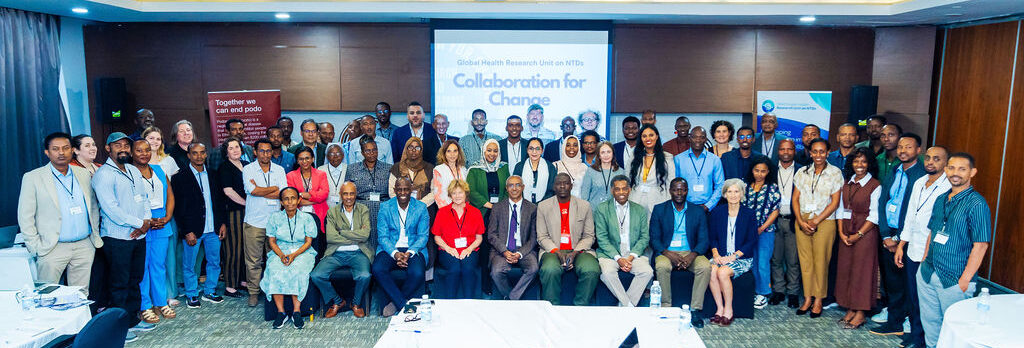
From Monday 18th May to Wednesday 20th May, the Global Health Research Unit on NTDs (GHRU) met together in Kigali, Rwanda at the Ubumwe Grande Hotel to host the final Annual Unit Meeting (AUM). Held over three days under the theme of “Collaborating for Change”, the event brought together partners from across Rwanda, Ethiopia, Sudan and the UK.
The meeting provided an important opportunity for collaborators and researchers to come together, reflect on progress, and showcase achievements across the GHRU. Partners delivered presentations highlighting impact, dissemination plans, and key milestones reached throughout the programme.
Day one started with three workshops under the topics of “working in fragile affected settings”; “engaging and involving actors for change”; and “building multi-level capacities and capabilities together”.
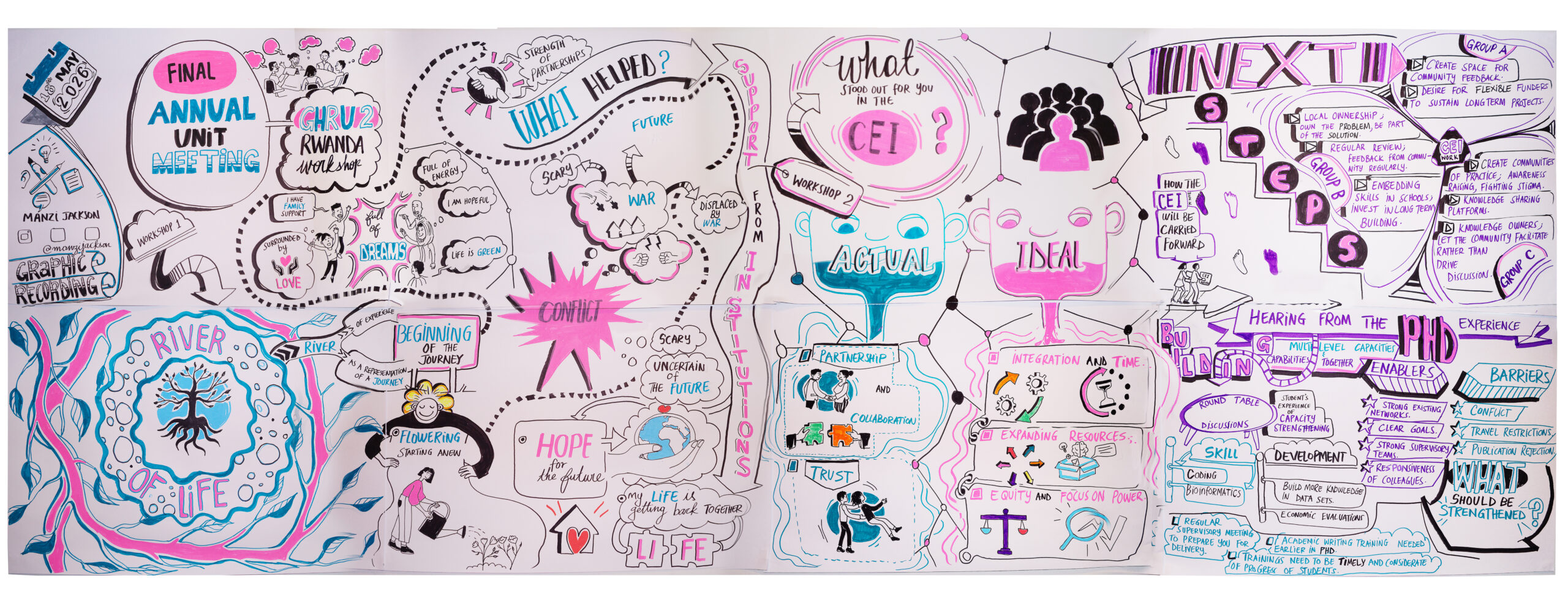
These workshops facilitated by Dr Erica Nelson (IDS),Dr Caroline Ackley (BSMS) and Jenni Wilburn, provided space for frank and honest conversions, as well as time for reflection on the last few years of the GHRU. Discussion and topics of conversation were captured in the brilliant visual living minutes by artist Manzi Jackson, which can be seen below and provide a visual summary of the direction of discussion taken among participants. The information from these workshops will be used to inform our research and develop GHRO Knowledge Products.
Professor Abraham Haileamlak Mitike
Day two of the AUM commenced Tuesday morning, with Professor Abraham Haileamlak Mitike speaking on behalf of the Vice Chancellor from the University of Rwanda emphasised the importance of strong partnerships, meaningful community engagement and implementation-focused research in developing ethical and sustainable interventions and reaffirmed its commitment to supporting future research, innovation and capacity building to ensure no communities are left behind.
Rwanda Biomedical Centre
Ladislas Nshiniyimana from the Rwanda Biomedical Centre presented the key priorities of Rwanda’s new NTD Strategic Plan (2026-2030)
Maurice Benewacu, a physiotherapist from Ruhengeri Teaching Hospital, shared his experiences of podoconiosis treatment activities introduced in Musanze district since 2022 in partnership with the GHRU. He described the significant positive impact of treatment and support services, including reduced swelling, improved mobility, restored dignity and increased social participation for patients.He described challenges such long travelling to clinics, difficulties in ongoing self-management, poverty and limited economic capacity and discrimination and social inclusion.
Jean Damascence
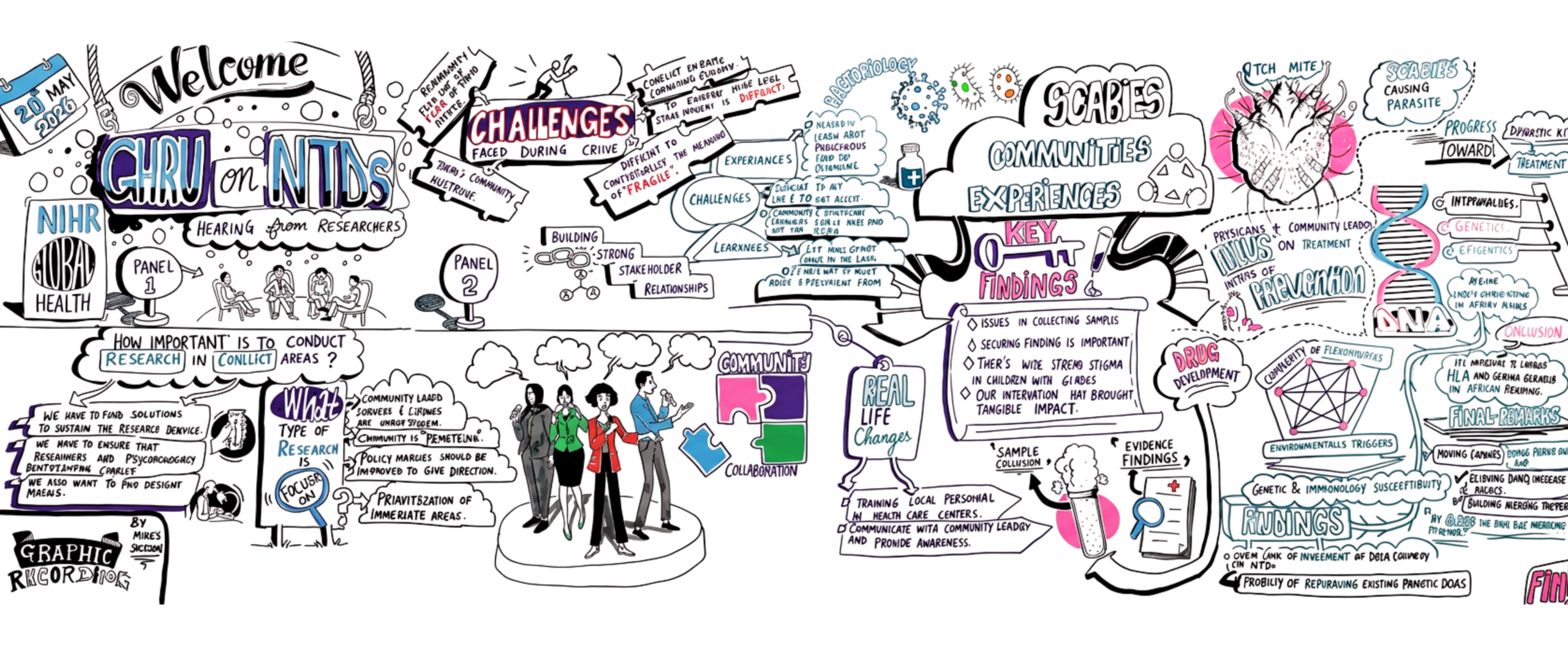
The morning session also included a powerful community testimony from Jean Damascence, a patient with podoconiosis who provided a vital perspective of the lived experience. He described how people affected by the condition had previously faced severe discrimination, exclusion and restrictions on their participation in everyday community life. Many people were isolated, unable to move freely, and experienced significant stigma linked to the disease. Importantly, he highlighted the value communities place on research participation and expressed a strong desire for findings to be communicated back to participants. Referring to previous genetic and susceptibility studies conducted in his community, he said he hoped the research would ultimately lead to better understanding, prevention and treatment of podoconiosis so that more patients could benefit from future interventions.
Key Themes Emerging from the Opening Session were
The audience then heard from the four theme leads who provided in depth updates on the progress made over the last 4 years of the GHRU and how the research has developed.
Following these presentations, the attention turned to the 12 PhD Candidates, who had been working hard prior to the AUM pulling together their research into academic posters. All were invited to a viewing of these posters and engage with the PhDs to understand deeper what their research entails and allow them to face both scrutiny and praise in a judges panel of votes! Congratulations to Aliyi Hassen for winning “best overall poster”, and Nadia Hitimana for winning the judges choice!
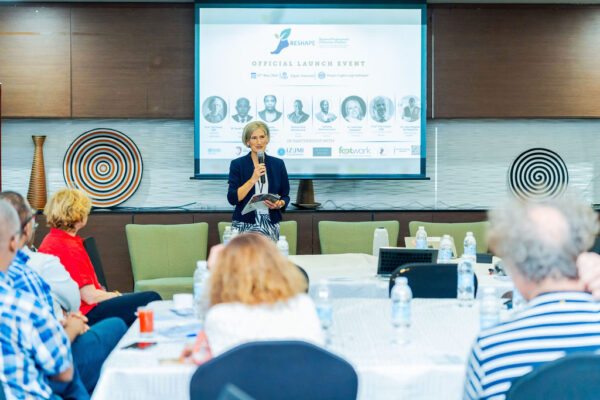
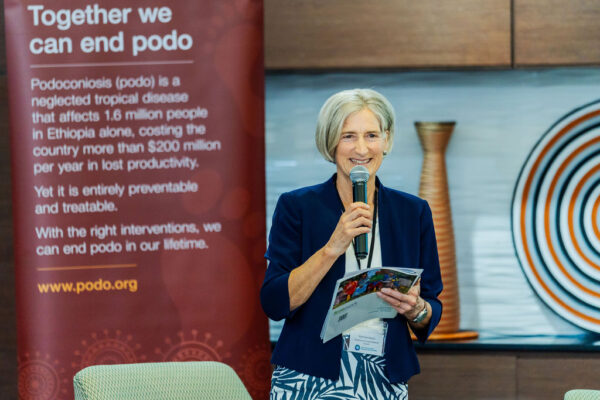
The day was wrapped up with the launch of the charity Footwork’s launch of their new strategy RESHAPE (Resilient and Sustainable Health Systems Approach for Podoconiosis Elimination), hosted in collaboration with University of Global Health Equity. More can be read about this launch here.
Day 3
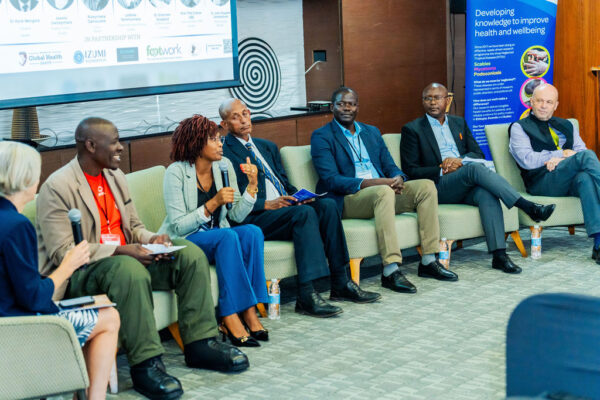
The final day kicked off with four engaging panel discussions covering a wide range of topics. The panels were made up of experts, PDRFs, Board Members and advocates who provided unique and vital insights into panel discussions. They were structured around four topics which will be written up as Knowledge Products and gave our Post Doctoral Research Fellow community the opportunity to present and answer questions within panel sessions.
Scroll through below to learn more about the panel sessions.
The meeting concluded with closing presentations from the Co-Investigators focussing on their dissemination and impact plans. They alsoho emphasised that although this marks the end of formal funding, the strength of the partnerships and spirit of collaboration will continue beyond the programme! Professor Abebaw Fekadu concluded by noting:
‘So what has this partnership, the Global Health Research Unit, meant to us? And to me, personally? For me, it has been help on the margins, but help of a deeply transformative kind. Yes, in the past 10 years, we have touched thousands of lives , most of whom have benefited significantly from this. We had many PhD and postdoctoral students. Many also benefited from employment opportunities and career progressions. At AAU, we have built an institution together. This partnership gave us hope, catalysed substantive change. When we started, we had a vision of an equitable partnership, framed through the capabilities model. And, I think, we have been faithful to that vision.’
With thanks to the organising committee and all delegates and participants for their contributions and engagement across the final annual unit meeting!